Free demo built for Working with Homeless, and Deescalation Training · Make it yours at freewave.dev/login · Live until September 18

Certification for shelters & outreach teams

Nobody should walk onto the floor unprepared.

A complete training, testing and certification program that gets volunteers ready for the real conversations — trauma-informed practice, de-escalation, boundaries and safety. Work through the lessons, pass the final exam, walk away with a certificate you can show your shelter director.

  • About 5 hours, self-paced
  • 8 modules, 24 checks, 40-question exam
  • Scored exam & PDF certificate
Volunteers sitting together in a training session while a facilitator presents at the front of the room
Certificate of Completion Issued on a passing score of 80% or higher
Built for
  • Emergency shelters
  • Street outreach teams
  • Faith & community groups
  • Food & warming centres
  • Campus volunteer programs

The program

Six things every volunteer needs before their first shift

Good intentions are not a plan. The training covers what actually happens on a shelter floor, in a van at 2am, or across a folding table at intake — and gives volunteers a response they have practised rather than one they invent under pressure.

MODULE 01 – 02

Context first, then de-escalation

Why people arrive here and what that changes about your response — then reading escalation early, lowering your voice instead of raising it, offering choice because control is what was lost, and knowing the difference between someone who is angry and someone who is in crisis. Scripts, not slogans.


Verbal tools Body language Exit strategy

MODULE 03

Trauma-informed practice

Why a raised hand or a locked door can read as a threat, how chronic stress reshapes behaviour, and how to offer help without repeating the loss of control that put someone here in the first place.

Triggers Consent Dignity first

MODULE 04

Boundaries that hold

What to do when you are asked for a ride, a phone number, money or a favour. Saying no warmly, staying consistent across the team, and protecting the relationship instead of the rule.

Saying no Consistency Referrals

MODULE 05

Safety & situational awareness

Positioning, sightlines, working in pairs, needle and weapon protocol, and the honest answer to “when do I stop trying to help and call someone?” Volunteers leave knowing their limits.

Positioning Escalation path Incident reports

MODULE 06

Substance use & mental health

Recognising intoxication versus psychosis versus medical emergency, talking to someone who is hearing voices, harm-reduction basics, and what naloxone does and does not solve.

Recognition Harm reduction When to call

MODULE 07 – 08

Systems, referrals & your own limits

How intake, housing waitlists and case management actually work, so volunteers stop promising what they cannot deliver — plus burnout, secondary trauma and debriefing after a hard night.

Referral map Documentation Self-care

How it works

Start this morning. Certified before your next shift.

The whole course runs in the browser and saves as you go, so a volunteer can do two modules on a lunch break and finish the exam later in the week. Nothing to install, no waiting for a seat.

Open the course and put your name on it

Enter the name and the organisation you want printed on the certificate, and the first module opens straight away. Progress is kept for you, so you can stop and pick it up where you left off.

Work through eight written modules

Around five hours in total — understanding homelessness, de-escalation, trauma-informed practice, boundaries, safety, crisis response, referrals and staying in the work. Most modules end in a real situation with no perfect answer, worked through line by line.

Clear the check after every module

Three scenario questions per module, twenty-four in all, marked the moment you answer with the reasoning behind the right response. Finish all eight and the final exam unlocks.

Sit the exam and download the certificate

Forty scenario questions, no time limit, no cap on retakes and no penalty for taking it again. Score 80% or higher and the PDF is issued immediately with your name, your organisation, your score and the date on it.

Start your certification

Two people reaching their hands toward each other between tall concrete pillars

94% Feel prepared for shift one

Why it matters

The moment that goes wrong is almost never the one people trained for.

Most volunteers arrive with real compassion and no framework. Then someone shouts, or cries, or asks a question there is no good answer to — and the volunteer freezes, over-promises, or takes it personally. That is the moment this course is built around.

  • Written by practitioners. Shelter directors, outreach workers and crisis clinicians who have run the shift, not consultants who read about it.
  • Scenario-based throughout. Every module ends in a situation with no perfect answer, because that is what the floor is like.
  • Documented and auditable. A certificate, a score and a date — the record insurers, boards and grant funders keep asking volunteer programs to produce.
  • Dignity is the throughline. Nobody is trained to manage people. They are trained to meet them.
8Core modules
40Questions in the final exam
5 hrsAverage completion time
24 moCertification validity

Curriculum

What is inside the eight modules

Open any unit to see the lessons. Every module finishes with a short scored check before the final exam.

Module 01 Understanding homelessness before you meet it

Context first. Volunteers who understand how people arrive here stop reading a hard conversation as a personal failure. About 30 minutes.

  • Nobody arrives here for one reason — the stack behind every loss of housing
  • The most common pathways in: eviction, lost work, family breakdown, fleeing violence, discharge without a plan
  • Chronic and situational homelessness, and why the distinction changes your shift
  • Language that helps, language that labels — small swaps that change the room
  • The assumptions volunteers carry in, and what they cost
Module 02 De-escalation fundamentals

The core skill of the course, taught as a sequence you can still recall when your own pulse is up. About 45 minutes.

  • Escalation is a curve, not a switch — reading the rising slope
  • Your body speaks before you do: distance, angle, hands, height
  • Voice: lower, slower, shorter — and what to actually say
  • Offering choice, because control is what was lost
  • The five failure modes that reliably make it worse
  • Worked scenario: a resident who will not leave the dining room after close
Module 03 Trauma-informed practice

Moving from “what is wrong with you” to “what happened to you” without turning it into a script. About 40 minutes.

  • Behaviour that looks irrational is usually adaptive — the four common responses
  • Six trauma-informed practices you can use on shift one
  • What re-traumatises people in ordinary buildings: searches, queues, locked doors, forms
  • Working with survivors of violence and trafficking
  • Worked scenario: a routine intake question shuts someone down
Module 04 Boundaries, ethics and the gift problem

The unit most volunteer coordinators say they wish they had had five years ago. About 40 minutes.

  • Boundaries protect the relationship, not the rule — and what a broken one costs
  • The requests you will actually get: money, rides, phone numbers, favours — and the standard answer for each
  • The warm no, in four steps
  • Promises, confidentiality and mandatory reporting: the non-negotiables
  • Worked scenario: a guest asks you to hold cash and documents overnight
Module 05 Safety and situational awareness

Positioning, sightlines, sharps, and the honest answer to “when do I stop trying to help and call someone?” About 40 minutes.

  • Safety is set up before the shift, not during the incident — your pre-shift checklist
  • Positioning: exits, angles, pairs and the rules that matter most
  • Sharps, spills and infection control protocol
  • Weapons, and knowing exactly where your job ends
  • Writing an incident report anyone can use, in four rules
Module 06 Substance use, mental health and crisis

Recognition and response, including the point at which the right move is to stop talking and call. About 45 minutes.

  • Telling apart intoxication, withdrawal, psychosis and medical emergency
  • Talking with someone who is hallucinating or highly paranoid
  • Asking the suicide question directly, and staying with the answer
  • Harm reduction and naloxone, in plain language
  • Worked scenario: a guest who is hard to rouse and breathing slowly
Module 07 Systems, referrals and documentation

How intake, waitlists and benefits actually work, so volunteers stop promising what nobody can deliver. About 35 minutes.

  • The map, roughly: the main kinds of housing help and who they are for
  • Benefits in plain language — what people are usually trying to access
  • The warm handoff: making a referral that actually connects
  • Documentation that helps rather than harms — factual, brief, useful
Module 08 Staying in this work

Secondary trauma, compassion fatigue and the debrief habit that keeps volunteers here past year one. About 30 minutes.

  • Three different things people call burnout, and why naming them makes them treatable
  • Early warning signs in yourself
  • The fifteen-minute debrief: four questions, in order
  • Grief is part of the job
  • Measure the shift, not the outcome — a better scorecard
Final Certification exam & certificate

Forty scenario questions drawn from across the eight modules. No time limit, retake it as often as you need. A pass is 80%.

  • Unlocks once every module and module check is complete
  • Immediate scoring, with an explanation on every question you missed
  • Certificate issued in your name and your organisation’s, downloadable as a PDF
  • Shows your score and the date of issue, and is valid for 24 months

Start the certification now

Voices from the floor

Volunteers who stopped guessing

What coordinators and first-year volunteers tell us after the certification.

Our turnover used to spike after the first hard night. Now people come in already knowing that night is coming, and what to do with it. We have kept nearly every volunteer from the spring cohort.
Portrait of Marisol Vega Marisol Vega Volunteer Coordinator, 120-bed emergency shelter
The boundaries module changed how I work. I used to say yes to everything and then quietly resent it. Learning to say no and stay kind is the reason I am still doing outreach two years later.
Portrait of Daniel Reyes Daniel Reyes Street outreach volunteer
Three weeks in, a guest started shouting at the meal line. I did the thing from Unit 2 — dropped my voice, gave him room, offered a choice. He sat down. A year ago I would have called for help and made it worse.
Portrait of Hannah Boyle Hannah Boyle Warming centre volunteer, first year
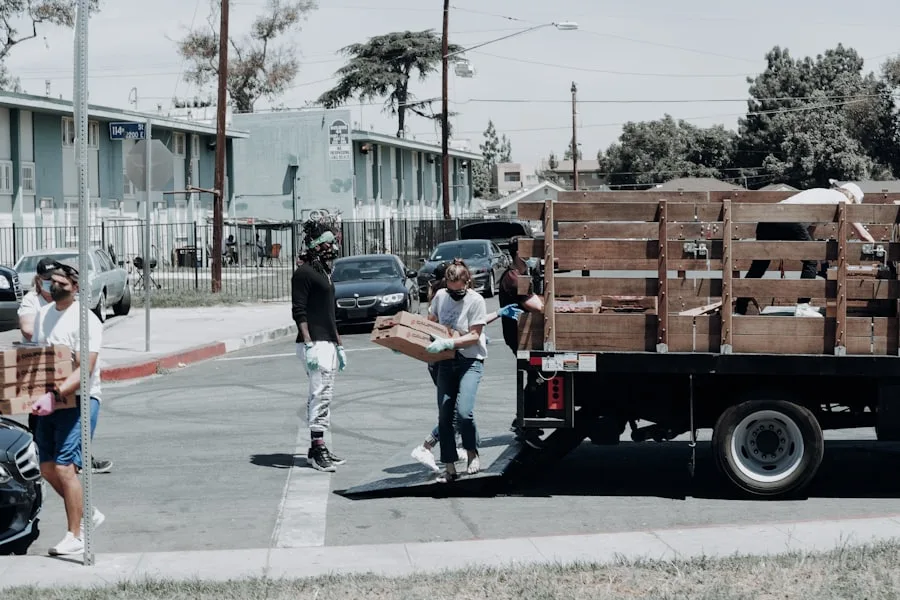
Volunteers carrying boxes of supplies from a truck at an outreach distribution
Outreach distribution, week two of a cohort
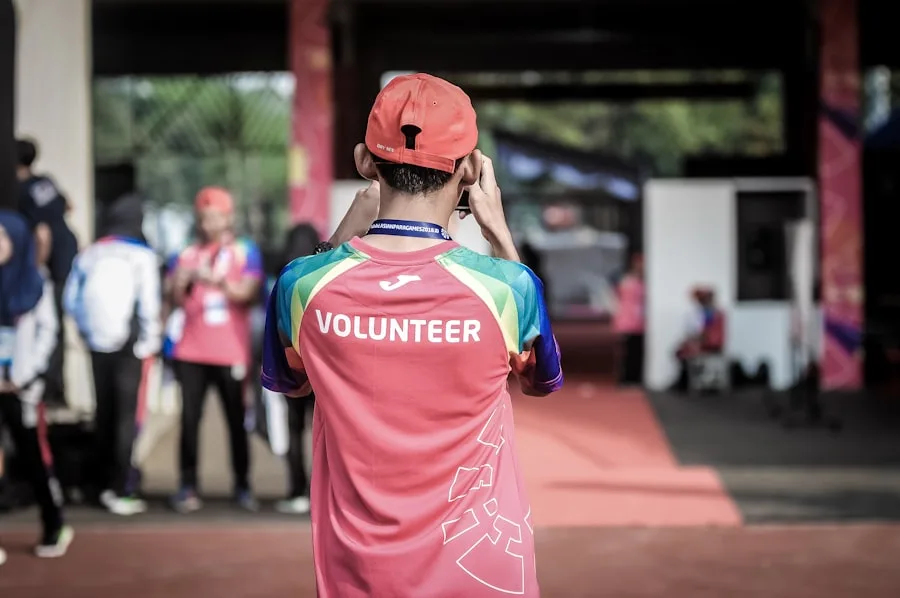
Volunteer in a bright team shirt standing at an outdoor service site
On shift, not on edge
A group of volunteers placing their hands together in a circle
Debrief before doors open
Trainees taking handwritten notes around a wooden table
Scenario workshop, Unit 4
Volunteers sorting donated goods into stacked boxes
Sorting donations at a partner site

Ready when you are

Eight modules, one exam, a certificate with your name on it

The whole certification is open right now — no account, no waiting list, no cost to begin. Work at your own pace, pass at 80%, and download the PDF the same minute.